History of the Liberty Bell
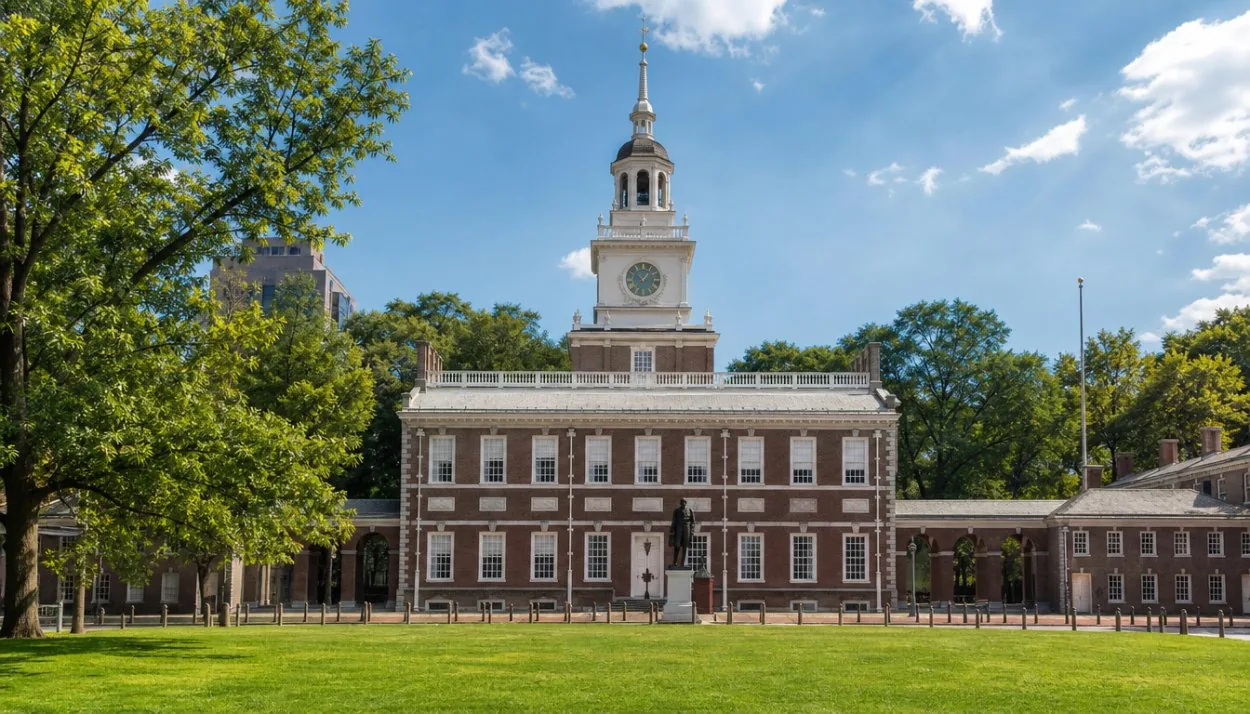
A bell for the State House
In 1751 Isaac Norris, Speaker of the Pennsylvania Assembly, ordered a bell from the Whitechapel Foundry in London for the bell tower of the State House, the building now called Independence Hall. When it arrived, it cracked on first use, according to the NPS. Two local craftsmen, John Pass and John Stow, melted it down and recast it, and then recast it again (Wikipedia). The finished bell of 1753 carries their mark, "Pass and Stow Philada MDCCLIII".
The NPS gives its weight as 2,080 pounds at the time of the order and its metal as bronze of about 70% copper and 25% tin, with small amounts of lead, gold, arsenic, silver and zinc. It hangs from its original yoke of American elm, according to Wikipedia. The inscription page covers the words cast into it.
The July 1776 question
A familiar story has the bell ringing on 4 July 1776, when the Second Continental Congress adopted the Declaration of Independence in the State House. Historians have found no evidence that it did, according to Wikipedia. Historians think it was probably among the bells rung on 8 July 1776, when the Declaration was read publicly.
How it got its name
The bell was not called the Liberty Bell in 1776. According to the NPS, "The Anti-Slavery Record, an abolitionist publication, first referred to the bell as the Liberty Bell in 1835." The first line of its inscription reads "Proclaim LIBERTY throughout all the Land unto all the Inhabitants thereof". The NPS exhibit follows the bell’s history "through its use by abolitionists and civil rights advocates", which is a large part of why it became a symbol of freedom.
The crack and the last ringing
By the 1840s the bell had cracked; the NPS places the crack in the early 1840s, after about 90 years of use. In 1846 the sides of the crack were filed wide in a repair attempt, and the bell was rung for Washington’s Birthday that February. A second, thin crack then ran "from the abbreviation for 'Philadelphia' up through the word 'Liberty'", which, in the words of the NPS, "silenced the bell forever". The crack page explains the two marks.
Travels and new homes
From the late 1800s the bell toured to expositions and fairs, according to the NPS. In 1915 it went by train to the exposition in San Francisco; Wikipedia states that five million people saw it on the journey. For the Bicentennial in 1976 it moved to a glass pavilion on Independence Mall, and on 9 October 2003 it was installed in the Liberty Bell Center, with tighter security after a 2001 attack on the bell by a visitor with a hammer (Wikipedia).
The bell has not been rung since 1846. Each July 4, descendants of the signers of the Declaration tap it 13 times, for the 13 original colonies.
Seeing the history on the ground
The State House is across Chestnut Street as Independence Hall, where the Declaration (1776) and the Constitution (1787) were both signed, according to the UNESCO World Heritage listing. The Independence Hall page covers visiting it. The Revolution and Founders History Tour lists a 2-hour walk with a historian that includes Independence Hall timed tickets and a stop to "See the Liberty Bell", per its listing.
The self-guided exhibits inside the Liberty Bell Center follow the bell’s history "through its use by abolitionists and civil rights advocates", per the NPS.
Frequently asked questions
Who made the Liberty Bell?
The first bell was cast at the Whitechapel Foundry in London. After it cracked, John Pass and John Stow recast it in Philadelphia in 1753, per the NPS. See the bellmakers page.
Did the Liberty Bell ring on July 4, 1776?
Historians have found no evidence that it did (Wikipedia). Historians think it was probably among the bells rung on 8 July 1776, when the Declaration was read publicly.
Why is it called the Liberty Bell?
According to the NPS, the abolitionist publication The Anti-Slavery Record first called it the Liberty Bell in 1835.
When was the Liberty Bell last rung?
In February 1846, for Washington’s Birthday. A second crack then silenced it, per the NPS.